
Chris Clark
What Does a Personal Representative Do in an Oregon Probate?
If you are nominated to serve as a personal representative in Oregon, your job is to locate, protect, manage, and ultimately transfer a deceased person’s probate assets according to the Will or Oregon law. You also must keep beneficiaries and creditors properly informed, pay valid obligations and taxes, maintain careful records, and follow required court procedures. It is a position of trust with real responsibility—not simply a title given to a family member.
I’m Chris Clark of The O’Neill Law Firm, and I work directly with personal representatives who are navigating probate after the death of a loved one . My goal is to make the process understandable while helping personal representatives carry out their duties carefully and efficiently.
A Personal Representative Is a Fiduciary
In Oregon probate, the court appoints a personal representative to administer the estate. A Will may nominate that person as an personal representative (sometimes called an executor); when there is no will, Oregon law determines who has priority to serve. In either situation, appointment by the court gives the personal representative authority to act for the estate.
The personal representative is a fiduciary. In practical terms, the personal representative must put the interests of those who have rights in the estate ahead of their own personal preferences, treat heirs and beneficiaries fairly, avoid conflicts of interest, and make decisions with appropriate care. Even when the personal representative is also a beneficiary, estate funds and property must be handled separately and transparently.
Every estate is different. A straightforward Portland probate may involve one home, a few financial accounts, and cooperative family members. Another estate may involve unpaid taxes, disputed claims, real estate that needs attention, or family conflict. The number and complexities of the issues encountered while administering a probate vary can substantially from case to case.
Taking Control of and Inventorying Estate Assets
One of the first duties is identifying what belongs to the probate estate. This may include bank accounts without a payable-on-death beneficiary, real property titled solely in the decedent’s name or held with others without survivorship, cars, investment accounts, personal property, refunds, and money owed to the decedent.
The personal representative must take reasonable steps to secure assets promptly. That can mean arranging insurance for a home, safeguarding valuables, redirecting mail, preserving records, and opening an estate bank account with a new taxpayer ID number for the estate. Estate money should not be mixed with the personal representative’s own money or another family member’s funds.
An inventory is then prepared and filed with the court. It should identify the estate assets and provide their estimated values. Thoroughness matters here. Missing an account, incorrect valuations for assets, and failing to obtain appropriate appraisals can create delays and additional work.
Giving Notice to Heirs, Beneficiaries, and Creditors
A personal representative is also responsible for required notices. I quickly arrange for the statutory notices to heirs, beneficiaries, and interested persons, and for the required publication notice. These notices are critical to ensure those whose rights may be affected by the probate are notified. Lack of required notice can cause major problems later, even after the probate assets have been distributed.
Creditors require careful attention as well. At the outset, the personal representative should conduct a thorough search for potential creditors of the decedent. I advise personal represetnatives on how to do this. A personal representative should not assume that a bill can simply be ignored, nor should they automatically pay every demand that arrives. A claim may be invalid, incomplete, disputed, or subject to a statutory deadline. Depending on the size of the estate, there might not be enough money in the estate to pay valid claims. It is important for the personal representative to understanding the correct order in which claims should be paid, and the procedures available in probate to handle disputed claims or to confirm unclear ones. Otherwise, the personal representative may be personally responsible to pay a claim that they otherwise would not need to pay. I am available throughout the probate to help personal representatives answer questions that arise about creditor claims.
Paying Debts, Expenses, and Taxes Before Distribution
Before beneficiaries receive final distributions, the personal representative generally must determine what the decedent and estate owes. These expenses may include funeral expenses, final medical bills, credit card balances, mortgages, utility costs, professional fees, and expenses needed to preserve estate property.
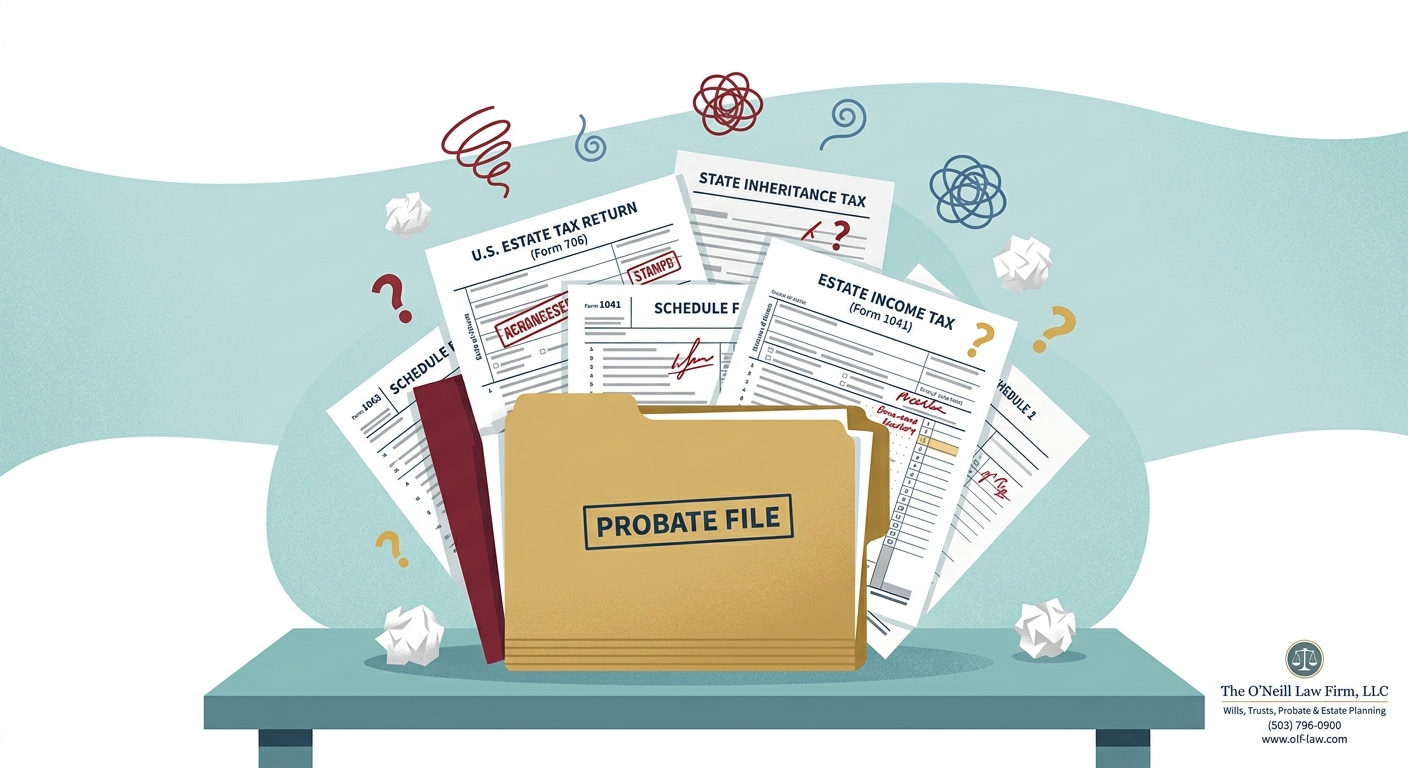
Tax obligations must also be addressed. A personal representative must often file the decedent's final income tax return (1040). Depending on the size of the estate, and Oregon and/or federal estate tax return (706) may also be required. The assets of the estate generate income and expenses can create deductions, so a fiduciary income tax return (1041) may also be necessary for the estate. The order and timing of payments matters. Generally, taxes have priority over unsecured creditors, and federal taxes have priority over Oregon taxes. Certain administrative expenses have some of the highest priorities. Paying creditors before all taxes have been resolved may leave the estate short of funds, and leave the personal representative liable to pay the difference from their own funds.
At The O’Neill Law Firm, I help personal representatives keep the bigger picture in view: what assets are available, what claims remain unresolved, the proper order of payments, what reserve may be prudent, and what filings or approvals are needed before the estate can close. For related planning guidance, visit Wills, Trusts & Estate Planning.
Distributing Assets and Closing the Estate
When the above tasks have been handled, the estate is generally ready to distribute the estate. The personal representative, in consultation with their attorney, will prepare a petition to distribute the estate in accordance with the Will, intestacy (if there is no Will), and subject to any agreement that may have been signed by the beneficiaries. The personal representative submits this petition to the court for approval. After court approval, the personal representative may distribute the estate to the beneficiaries.
The personal representative must provide a full accounting of how assets were handled during the estate administration. Receipts, account statements, copies of checks, sale records, and supporting documents are essential. If all beneficiaries agree, a statement in lieu of an account is possible.
Only after the required steps are complete can the estate be closed. For a closer look at the administration process, see Probate & Trust Administration.
Personal Liability Risks When Duties Are Mishandled
Serving as personal representative does not mean you are personally responsible for every debt of the deceased person. However, a personal representative can face personal liability for losses caused by improper administration or a breach of fiduciary duty.
Common risks include commingling estate assets with personal funds, failing to protect property, making unauthorized self-dealing transactions, neglecting to collect estate assets, paying the wrong parties, paying the right parties but in the wrong order, distributing property before debts and taxes are addressed, or failing to keep adequate records. A mistake can be particularly costly when it reduces what is available for creditors or beneficiaries.
This is why “doing the best you can” is not always enough. Probate requires attention to timing, documentation, notices, and the terms of the will. Getting experienced legal guidance early can help a personal representative make informed decisions before a small problem turns into a delay, dispute, or financial exposure.
Why Direct Guidance From One Attorney Matters
When you are dealing with the loss of a parent, spouse, or other loved one, it helps to have consistent guidance. At The O’Neill Law Firm, I personally handle each client matter. I do not hand your probate file from one associate attorney or paralegal to another.
That direct relationship means I can learn the facts of the estate, answer questions in plain language, and help you spot issues before they become mistakes. From the petition for appointment through inventory, creditor issues, accounting, distribution, and closing, you work with the same attorney throughout the process. For many personal representatives, that continuity provides both practical direction and peace of mind during a demanding time.
FAQ
Does a personal representative have to be a lawyer?
No. A personal representative is often a family member or trusted friend. However, probate is a legal process, and the personal representative may benefit from working with a probate attorney to understand duties, deadlines, and court filings. In many Oregon counties, the court will require the personal representative to have an attorney.
Can a personal representative sell a house in an Oregon estate?
Yes, but the authority and process depend on the estate, the will, and the liquidity of the estate. Before listing or selling estate real estate, it is wise to consult with an attorney.
Can beneficiaries receive money before probate is finished?
Sometimes an interim distribution may be appropriate, but it should not put creditors, taxes, expenses, or the final distribution at risk. The personal representative should understand the estate’s obligations before releasing funds. In any case, prior court approval is required before making any distribution to beneficiaries.
How long does Oregon probate take?
The timeline depends on the assets, creditor period, tax issues, court filings, and whether disputes arise. A simple estate may move more quickly than one involving real estate, complex assets, or contested issues.
What should I do first if I have been named personal representative?
Gather the will, death certificate, available financial information, and a preliminary list of assets and debts. Then speak with an Oregon probate attorney before taking actions that could affect the estate or its beneficiaries.
If you have been named a personal representative or need to be appointed as one when there is no Will, call The O’Neill Law Firm during business hours at (503) 796-0900 to discuss your next steps with me directly.

What Does a Personal Representative Do in an Oregon Probate?

Starting Probate in Gresham: What Families Should Know

How Long Does Probate Take in Oregon?
Protecting the Personal Representative from Unfiled or Unpaid Taxes in an Oregon Probate

How New Tax Incentives Can Boost Your Charitable Giving

Tricks and Traps in Managing an Insolvent Probate Estate in Portland

Don’t Forget Your Beneficiary Designations

Taxes in Probate: The Essentials

How Life Changes Reshape Your Estate Plan

Choosing a Guardian: Myths and Realities

Essential Legal Documents for Turning 18

Stay Alert: Common Scams Targeting Seniors

Probate Responsibilities: Handling Decedent Taxes in Portland

Updating Your Estate Plan for New Family Members

Spring Cleaning Your Estate Plan: A Fresh Start
