
Chris Clark
How Long Does Probate Take in Oregon?
Quick Summary:
How long probate takes in Oregon depends on the estate, but a straightforward, uncontested estate commonly takes at least six months and often closer to nine to 12 months from filing to final distribution. The mandatory creditor-notice process alone creates a waiting period, and disagreements, real estate, tax questions, or incomplete records can add substantial time. Chris Clark of The O’Neill Law Firm helps Portland, Oregon families understand the likely path before we begin—not just the best-case timeline.
After a death, families understandably want a clear answer to “How long will this take?” Probate is a court-supervised process for identifying estate assets, paying valid debts and expenses, and transferring what remains to the people entitled to receive it. Every estate has its own facts, but knowing the usual stages can make an unfamiliar process feel more manageable.
A Practical Oregon Probate Timeline
For many ordinary Oregon estates, I tell clients to plan on a process measured in months, not weeks. The work begins with gathering the will, death certificate, asset information, and the names and addresses of heirs and beneficiaries. After the initial probate petition is filed, the court appoints a personal representative and gives that person authority to act for the estate.
From there, the personal representative must give required notices, identify and protect assets, prepare an inventory, address debts and expenses, and ultimately provide the information needed to close the estate. An estate with organized records and liquid assets may progress more efficiently. Even then, the statutory claim period and closing requirements mean that immediate distribution is usually not realistic.
At The O’Neill Law Firm’s Probate & Trust Administration practice, I focus on setting a working schedule early: what needs to happen first, what we are waiting on, and what can be done while that waiting period runs.
Uncomplicated Probates
When the will is clear, the right person is willing and able to serve, interested parties cooperate, and the assets are identifiable, the administration is generally more predictable. A relatively uncomplicated estate may be ready to close after the creditor period expires, the inventory and accounting work are complete, and all estate obligations have been resolved. In practical terms, six to nine months can be a reasonable planning range for this type of case, though court processing times and the estate’s specific facts matter. I prefer to describe that as a planning estimate, not a promise.
Some smaller estates may qualify for Oregon’s separate small-estate affidavit procedure rather than full probate. That can be shorter and less costly in the right circumstances, but eligibility and timing still deserve a careful review.
Complicated Probates Takes Longer
Probates can become complicated when there is a will contest, disagreement over who should serve as personal representative, uncertainty about heirs, a disputed creditor claim, or another contested issue. These matters do not follow the same smooth timetable as an uncomplicated probate.
A dispute can require additional notices, petitions, evidence, hearings, negotiation, and sometimes litigation. A will contest, for example, can pause or reshape the administration while the court resolves questions about the will’s validity or a person’s interest in the estate. In those cases, a year or more may be realistic, and some estates take significantly longer.
The important point is not to label an estate “easy” or “difficult” too quickly. I have focused on Oregon probate and estate administration since 2006, and early conversations often reveal issues that affect both the legal approach and the calendar.
The Creditor Claim Period Sets a Real Floor
One reason probate cannot usually be completed in a few weeks is the creditor-notice process. Oregon law generally gives creditors a period tied to notice—commonly four months after publication of notice to interested persons, with additional rules for known claimants who receive direct notice. During that time, the personal representative gathers information, reviews claims, pays proper expenses, and avoids distributing assets too early.
This waiting period is not wasted time. It protects the estate, the personal representative, and the beneficiaries by creating an orderly opportunity to identify valid debts before final distribution. The personal representative can often accomplish a great deal while claims are pending, including collecting accounts, communicating with financial institutions, maintaining property, and preparing the inventory.
Real Property Can Extend the Schedule
A Portland, Oregon home or other real property can make a probate timeline more complicated. Before a sale or distribution, the estate may need to address mortgage balances, insurance, repairs, appraisals, tax issues, and communication with beneficiaries. If a sale is needed to pay debts, the ordinary realities of preparing, listing, and closing a property become part of the probate schedule.
Real estate does not automatically make probate contentious, but it often adds decisions and moving parts. A beneficiary may want to keep the home while another prefers a sale. There may be a tenant, deferred maintenance, or uncertainty about value. Addressing those questions promptly can prevent avoidable delays later.
Other Issues That May Slow Probate
- Missing or disorganized records: Locating accounts, deeds, insurance policies, and tax information takes time.
- Hard-to-locate heirs or beneficiaries: Notice requirements still apply, even when family relationships are distant or unclear.
- Business interests or complex investments: Valuation, management, and transfer issues may need special attention.
- Tax filings: Final income-tax returns, fiduciary returns, or estate-tax analysis can affect when an estate is ready to close.
- Family conflict: Even a solvable disagreement can delay decisions if communication breaks down.
Why Realistic Expectations Matter From Day One
Good probate administration is not simply about moving as fast as possible. It is about moving carefully, communicating clearly, and avoiding steps that create bigger problems later. I want clients to understand the milestones, the waiting periods, and the decisions that may affect the finish line.
As a solo attorney, I personally handle every matter at The O’Neill Law Firm. That means you can speak directly with me about the status of the estate and the next practical step. For Portland families already carrying the burden of loss, plain-language guidance and a realistic timeline can make a meaningful difference.
FAQ
Can probate in Oregon be completed in less than six months?
It is possible in some circumstances, but issues that arise during a probate can extend the timeline.
Does every Oregon estate need probate?
No. Assets held in certain ways may transfer outside probate, and some qualifying estates may use a small-estate affidavit. A review of the assets and how they are titled is the best starting point.
Will selling a house delay probate?
It can. Preparing and selling real property adds title, valuation, repair, and closing tasks. With early planning, those tasks can often proceed alongside other estate-administration work.
What happens if someone contests the will?
A contest can add hearings, deadlines, evidence, and negotiation or litigation. The resulting timeline depends on the issues raised and whether the parties can reach a resolution.
How can a personal representative help keep probate moving?
Promptly gathering records, communicating with beneficiaries, protecting estate property, and responding to requests for information are all important. Experienced legal guidance can help the personal representative prioritize the right tasks at the right time.
If you are facing probate in Portland or elsewhere in Oregon, contact The O’Neill Law Firm or call (503) 796-0900 during business hours for a realistic walk-through of your estate’s likely timeline.

How Long Does Probate Take in Oregon?
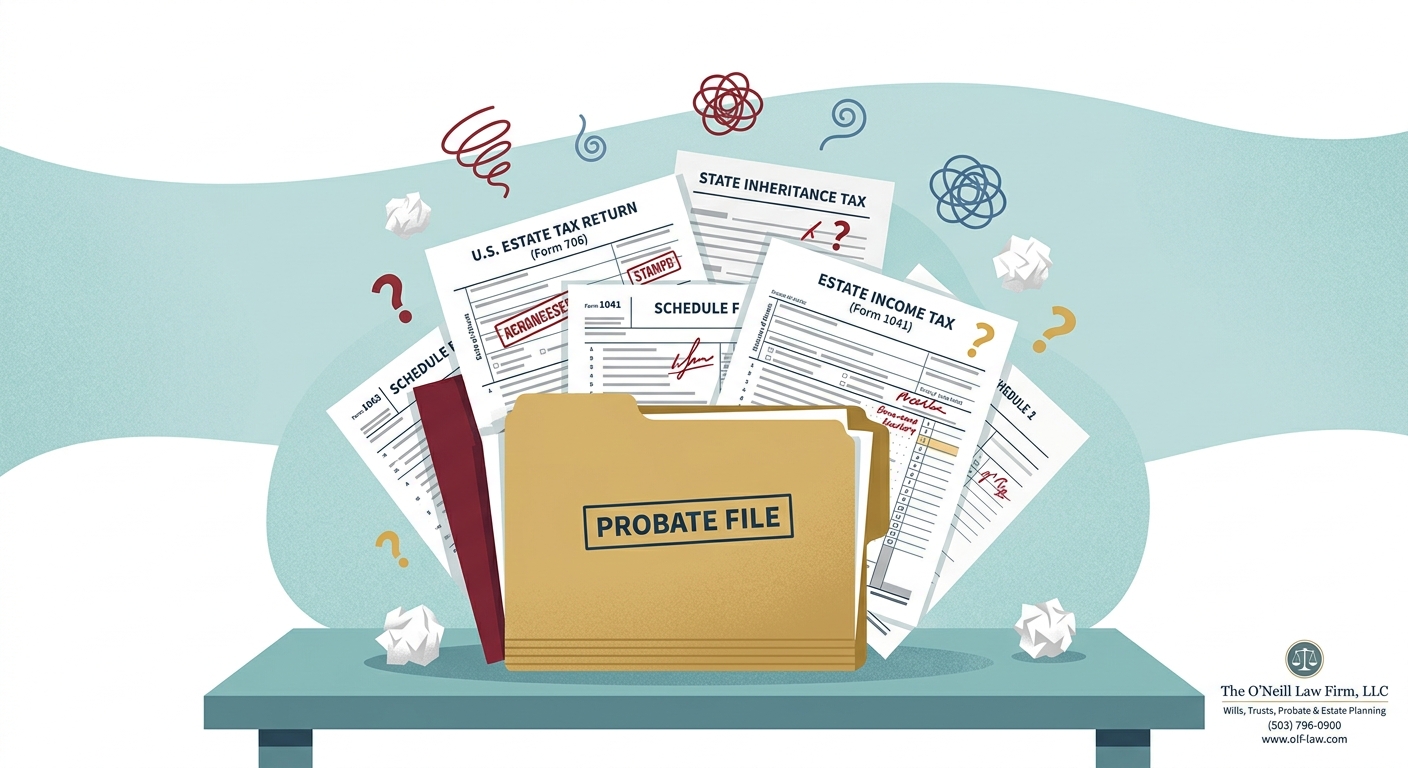
Protecting the Personal Representative from Unfiled or Unpaid Taxes in an Oregon Probate

How New Tax Incentives Can Boost Your Charitable Giving

Tricks and Traps in Managing an Insolvent Probate Estate in Portland

Don’t Forget Your Beneficiary Designations

Taxes in Probate: The Essentials

How Life Changes Reshape Your Estate Plan

Choosing a Guardian: Myths and Realities

Essential Legal Documents for Turning 18

Stay Alert: Common Scams Targeting Seniors

Probate Responsibilities: Handling Decedent Taxes in Portland

Updating Your Estate Plan for New Family Members

Spring Cleaning Your Estate Plan: A Fresh Start
